
When an Ontario winter hits full force—bringing sub-zero temperatures, freezing wind chills, and heavy snowfall homeowners with heat pumps often ask one central question: Can my system really keep up when it gets this cold?
While older heat pumps struggle once temperatures drop below freezing, modern cold-climate heat pumps (CCHPs) engineered for Canadian winters can efficiently heat your home down to -25°C (-13°F) or lower.
Here is everything you need to know about heat pump efficiency in deep Ontario winters, how auxiliary backup heat works, and practical strategies to keep your home warm without skyrocketing your energy bill.
1. How Cold Heat Pump Technology Works in the Freeze
Standard heat pumps extract heat energy from outdoor air and transfer it inside. Even in cold air, thermal energy exists. However, as the outdoor temperature drops:
- Heat Capacity Drops: The amount of available heat in the outside air decreases.
- Efficiency (COP) Decreases: A heat pump’s Coefficient of Performance (COP) measures how many units of heat it delivers per unit of electricity consumed. At mild temperatures, COP can be 3.0 to 4.0 (300% to 400% efficient). At -15°C, that efficiency may drop to 1.5 to 2.0—still more efficient than electric baseboards (1.0), but requiring more continuous operation.
Modern Cold-Climate Heat Pumps (CCHPs) overcome this using variable-speed inverter compressors and advanced refrigerants, allowing them to extract ambient heat reliably even when GTA winters reach extreme lows.
2. When Does a Heat Pump Need “Backup” Heat?
In Southern Ontario and the GTA, winter temperatures frequently hover between 0°C and -10°C, where cold-climate heat pumps operate at high efficiency. However, during deep Arctic freezes (below -15°C to -25°C), systems usually rely on a supplemental (hybrid) heat source:
| System Setup | Primary Heating | Auxiliary / Backup Source & Performance |
| Dual-Fuel / Hybrid | Heat Pump | High-Efficiency Gas Furnace. Automatically switches to the gas furnace at a designated crossover temperature (e.g., -10°C to -12°C) for maximum comfort and lowest operating cost. |
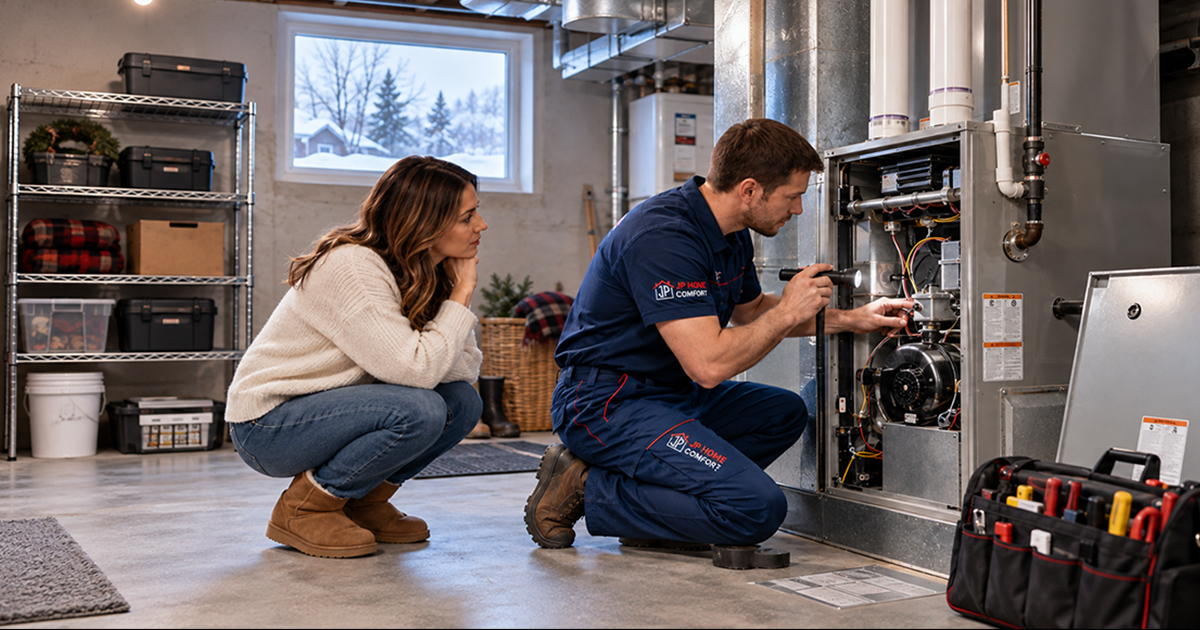
| All-Electric System | Heat Pump | Electric Resistance Heat Strips. Heat strips kick in automatically to assist the heat pump during extreme cold snaps or defrost cycles. |
3. The “Crossover Point”: Finding the Balance
The crossover point is the outdoor temperature at which it becomes more cost-effective or necessary to switch from your heat pump to your secondary heat source.
Determining your ideal crossover temperature depends on:
- Your Equipment Rating: Ductless multi-splits vs. central cold-climate systems have different low-temperature thresholds.
- Current Utility Rates: Comparing the cost of natural gas vs. electricity in Ontario.
- Thermal Envelope: How well-insulated and air-sealed your home is.
4. Tips for Optimizing Heat Pump Performance in Ontario Winters
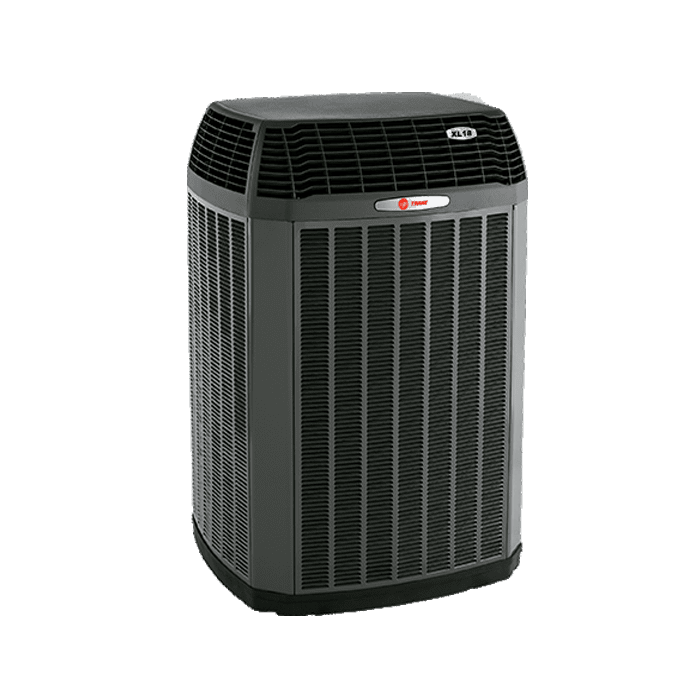
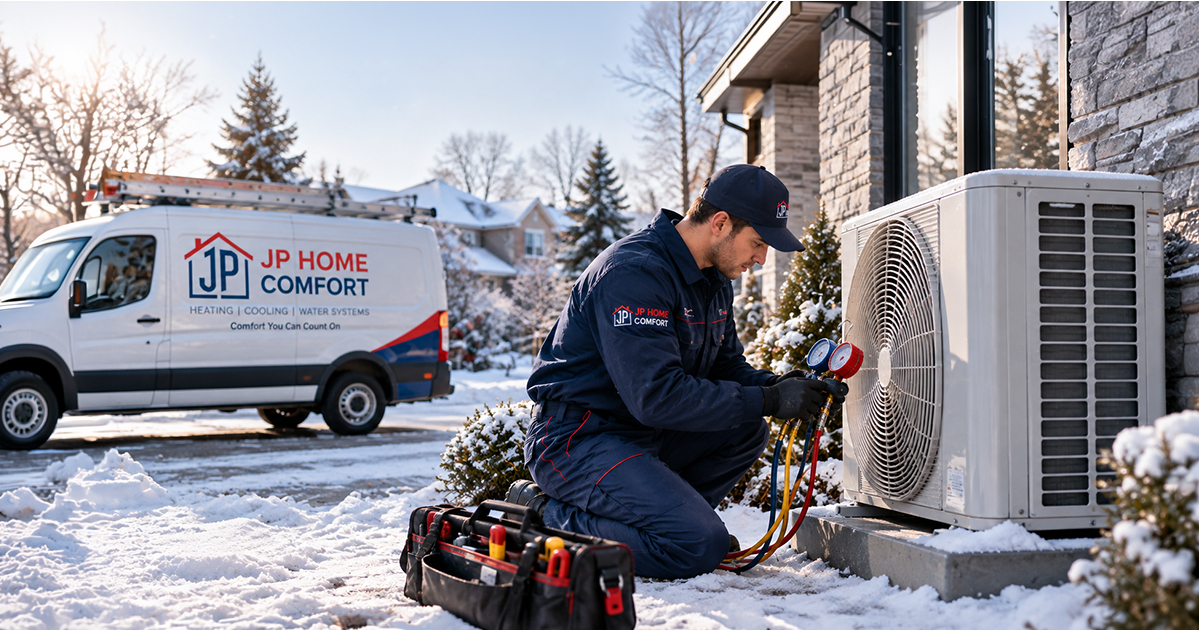
Keep the Outdoor Unit Clear
Snow drifts and ice buildup around your outdoor compressor restrict airflow, forcing the system into frequent defrost cycles.
- Clear at least 2 feet of clearance around the outdoor unit after snowfalls.
- Ensure the unit is elevated on snow legs or wall brackets, above typical local snowpack depth.
- Never let ice accumulate beneath or on top of the coil.
Maintain a Steady Temperature (“Set It and Forget It”)
Unlike gas furnaces, which blast high-heat air on demand, heat pumps maintain warmth through steady, low-speed operation.
- Avoid dropping night setbacks lower than 1°C to 2°C. Large temperature setbacks force the system to work in high-demand modes, often triggering expensive auxiliary backup heat to catch up.
Schedule Pre-Winter Maintenance
Before freezing conditions arrive, have a licensed technician perform an annual winter tune-up:
- Check refrigerant levels and compressor pressures.
- Inspect defrost sensors and drain pans to prevent freeze-ups.
- Clean or replace air filters to maintain proper airflow across the indoor coil.
Keep Your GTA Home Warm All Winter Long
Cold-climate heat pump technology has made all-season electric heating a reliable reality for Ontario homeowners. Whether operating as a standalone CCHP or paired with a gas furnace in a dual-fuel setup, proper installation and smart controls ensure reliable comfort no matter how low the thermostat drops outside.